
Why Does Corfu Have So Many Olive Trees? The Venetian Story Behind the Island's Green Landscape
Look out of a car window almost anywhere in Corfu and you will see them: silvery-green canopies, immense twisting trunks and groves that seem to stretch from village lanes to the hillsides. Olive trees are so closely associated with the island that it is difficult to imagine Corfu without them. But why are there so many?
The answer combines Corfu's favourable growing conditions with a deliberate economic policy under Venetian rule. Olive trees grew here long before Venice governed the island. What changed was the scale of cultivation. Centuries later, the groves remain a working landscape, a family inheritance and one of Corfu's most recognisable sights.
The quick answer: why Corfu is covered in olive trees
Corfu has a Mediterranean climate suitable for olives, but climate alone does not explain the extraordinary number of trees. During Venetian rule (1386–1797), the authorities encouraged planting and expansion because olive oil was commercially valuable. A particularly important incentive dates to 1623. The result was an extensive agricultural landscape that outlived Venetian government and remains visible today.
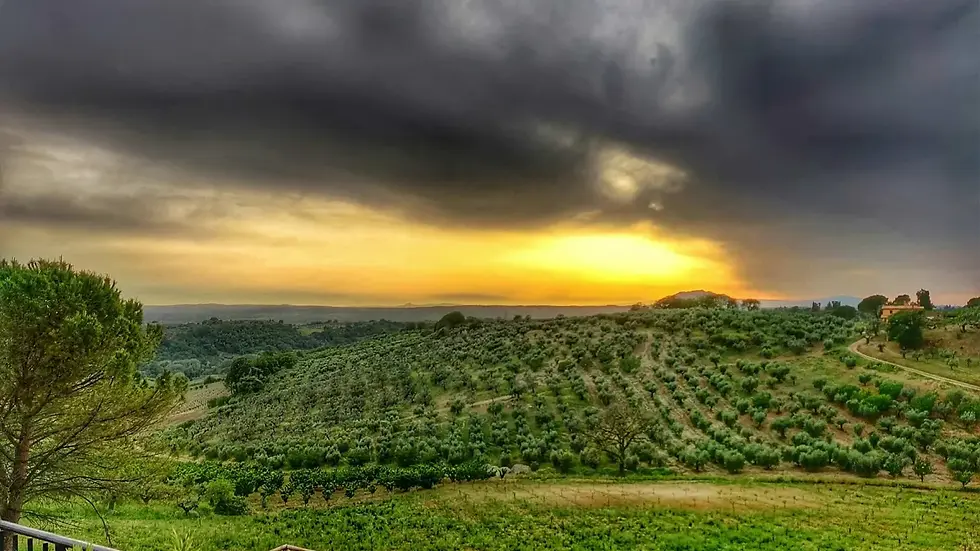
Photo: The olive-covered landscape is one of Corfu's most distinctive sights.
You will often see an estimate of around four million olive trees for the island. It is a widely repeated approximation, not a verified contemporary tree-by-tree count. The number is useful for conveying the scale of cultivation, but it should not be presented as a precise census.
Olive trees were here before Venice
The olive is one of the Mediterranean's oldest cultivated trees. Corfu's climate, soil and landscape have long supported it. The Venetians did not introduce every tree, and the idea that all of the island's olives were planted in a single historical period is misleading. Earlier cultivation provided a starting point; Venetian policy helped transform olives into a dominant crop.
The Venetian decision that changed Corfu's countryside
Venice governed Corfu from 1386 until the republic's fall in 1797. In a maritime trading economy, olive oil had uses extending well beyond the kitchen: it supplied lighting, food preparation and manufacturing. Expanding production in the Ionian Islands therefore made commercial sense.

Photo: Traditional rural buildings and olive groves form part of Corfu's agricultural landscape.
The Capodistrias Museum records a decisive step in 1623, when Venetian authorities encouraged inhabitants of the Ionian Islands to cultivate wild olives and plant new trees by subsidising each new planting. In other words, the famous olive-covered view was shaped not only by nature and farming tradition but also by an organised economic incentive.
By the 18th century, records show how extensive olive cultivation had become. Venetian state archives for 1766–1770 recorded 13,670 olive trees and four presses at Evropouli, and 63,765 trees and 16 presses at nearby Potamos. Those figures are for two particular communities, not the whole island. Even so, they vividly illustrate the importance of the crop.
The same museum tells the story of the Capodistrias family's productive estate at Koukouritsa, where groves, vineyards and fields supplied livelihoods for workers from neighbouring villages. Its records show that olive trees were assets that could be counted, managed, inherited and passed between generations.
A short timeline of Corfu's olive-tree history
Before Venetian rule: olives were already cultivated in the wider Mediterranean and on the island.
1386: the start of Venetian rule on Corfu.
1623: documented Venetian incentives for additional planting.
Late 18th century: detailed historical records reveal extensive groves and presses.
From 1797 onwards: political control changed, but olive cultivation continued.
Today: traditional groves coexist with newer harvesting and milling methods, museums and producers offering visitor experiences.
How old are Corfu's enormous olive trees?
Some Corfiot trees are genuinely ancient, with huge, hollow or sculptural trunks. But appearances can deceive: circumference alone cannot tell us exactly how old a living olive tree is. Trees can become hollow with age, and measuring growth in old specimens is scientifically challenging.

Photo: Old olive trees can develop enormous sculptural trunks, although appearance alone cannot establish their age.
Researchers at TU Dresden used a dendrochronology-based approach and a regression model to estimate the ages of three very large olive trees at Stroggili on Corfu.
Their estimates ranged from approximately 735 years for the youngest to 1,120 years for the oldest. These are modelled estimates rather than exact planting dates, and they should not be applied to every impressive tree on the island.
The important distinction is that Corfu has old olive trees supported by serious scientific study, alongside many others whose exact age is unknown. If someone tells you that a particular tree is 2,000 years old, ask how that figure was established before treating it as fact.
What makes a Corfiot olive grove look so different?
The characteristic impression is almost woodland rather than an orderly commercial orchard. Tall trees spread into canopies that meet overhead, while mature roots and trunks wind around rocks, walls and uneven ground. Visitors travelling along country roads often pass through stretches of dappled light created by these interlocking branches.
The landscape is not uniform. Some groves are old and irregular; others are maintained or replanted in more modern ways. There are also differences in pruning, harvesting methods, ground cover and access. Remember that an apparently wild grove may still be a privately owned and productive farm.
Lianolia Kerkyras: the olive associated with Corfu
Lianolia Kerkyras, often called Corfiot Lianolia, is closely associated with the island. It is an olive variety used to produce olive oil, and its trees can develop the distinctive tall form familiar from established Corfiot groves. Its oil can have green, fruity and peppery notes, although flavour varies with growing conditions, harvest timing and processing.
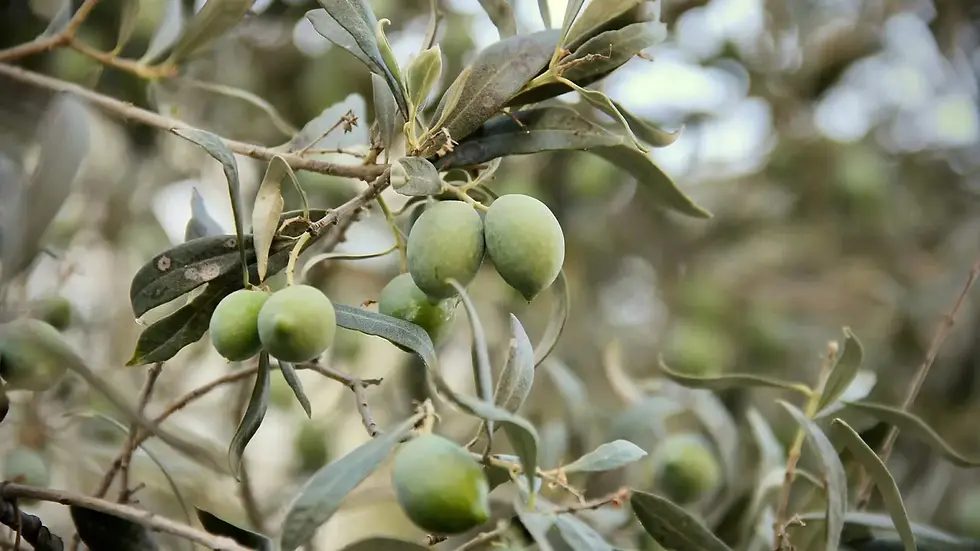
Photo: Olive varieties and harvest dates influence the flavour and characteristics of the oil.
Not every olive on Corfu is Lianolia. Koroneiki is also grown and used by some producers, so it is worth asking exactly which variety or blend you are tasting. Local identity is about the variety, the land and the producer's methods, not a single universal flavour.
Why are there nets under so many olive trees?
Visitors sometimes wonder whether the dark nets spread under olive trees have been abandoned. In many traditional groves they are a practical part of the harvest. The nets help gather fruit that falls from large trees, which may be difficult or impractical to pick by hand directly from every branch.

Photo: Freshly gathered olives reveal the variation in fruit colour as they ripen.
There are trade-offs. Fruit that remains on the ground or in nets for extended periods is more exposed to damage and deterioration.
Producers who focus on early-harvest extra virgin olive oil may pick olives directly from the tree and mill them quickly, while others continue methods developed around large, mature groves. Neither an old method nor a new one guarantees quality by itself: timing, handling and processing matter.
From olive to oil: what happens at the mill?
Traditionally, fruit was crushed by heavy millstones and the paste pressed to extract its oil. A historic olive press can reveal just how much physical work was involved, including the use of animal power and later mechanical systems. Modern mills usually use mechanical crushing, mixing and centrifugal separation.

Photo: Traditional stone mill equipment illustrates earlier methods of crushing olives.
Good oil begins before the olives reach the mill. Healthy fruit, careful handling, prompt processing and suitable storage help preserve freshness. Once bottled, oil also needs protection from heat, light and air. When visiting a producer, ask about the harvest date and how quickly their olives reach the mill: those questions often tell you more than a dramatic label.
What is extra virgin olive oil, and what should it taste like?
Extra virgin olive oil is a defined quality category with chemical and sensory standards. It is not simply a fancy marketing description. Good examples can smell of fresh grass, leaves, herbs or fruit, with gentle bitterness and a peppery finish.
The sensation of pepper at the back of the throat is familiar in some fresh oils, but it is not a stand-alone test of authenticity.
At a tasting, try a small amount on its own before adding bread. Notice the aroma first, then the flavour and finish. Ask whether the producer offers a single-variety Lianolia oil or a blend, and compare oils from different harvests if available.
Does Corfu have protected olive oil?
Yes. The geographical name Agios Mattheos Kerkyras is registered as a Protected Geographical Indication (PGI) for olive oil. PGI refers to a recognised geographical product specification; it does not mean that every bottle produced anywhere on Corfu automatically carries that status. Check the actual label if protected origin matters to you.
Olive oil was valuable beyond the kitchen
Olive oil supported households, estates and trade, and olives were also connected with other industries. One particularly tangible survivor is the Patounis soap works in Corfu Town. The Patounis family operates from premises dating to 1891, using traditional soap-making techniques associated with local olive products.
The factory has been recognised as part of Greece's industrial and intangible cultural heritage. It is a reminder that the olive's economic history includes manufacture, craftsmanship and jobs, not only salads and tavernas.
Where to discover Corfu's olive-oil heritage
For visitors, the most memorable experience is often to combine a countryside drive with a real working mill, museum or tasting. The following are verified places worth researching for your trip. Do check seasonal schedules and any reservation requirements on their official websites before setting out.

Photo: Olive groves are living agricultural spaces, not simply scenic woodland.
The Mavroudis family operates an olive-oil museum beside a working mill near Vraganiotika in southern Corfu. Its collection includes historic milling equipment and a horse-powered press, allowing visitors to compare older production with contemporary methods.
The museum offers tastings and published tour arrangements, but its own website warns that arrangements may vary as the season ends. Check directly before travelling, especially in winter.
In Vistonas in the north-west of the island, ENOTIS opened a museum in 2022 featuring tools and objects linked to olive harvesting, storage and production. Its exhibits were developed with input from the Ionian University. This is an especially relevant stop for understanding the people and practices behind the island's distinctive groves, as well as tasting locally produced oil.
The village of Kynopiastes has a traditional press that operated until 1970 and now forms the Donatos Paipetis Olive Museum. Official Corfu tourism information describes old machinery, extraction tools and photographs illustrating village life. Check access details before making a special journey; a historic museum's presence does not guarantee daily opening.
At 9 Ioannou Theotoki Street, Patounis makes a compelling town-based stop, particularly for travellers without a hire car. The company's published visitor arrangements include soap-making demonstrations and guided visits, with seasonal differences. It is an opportunity to see Corfu's olive heritage in an active workshop rather than only in a museum.
The Capodistrias Museum tells the story of a historic productive estate, including its groves and its economic and social life. It is particularly valuable for understanding how carefully olives were managed during and after Venetian times. It also provides some of the strongest documentary evidence behind the olive-tree history explained in this guide.
How to plan your own olive-country visit
If you are staying in Corfu Town, a visit to Patounis is an accessible introduction. Travellers heading into central villages can explore the Koukouritsa and Kynopiastes history; those travelling south might combine rural scenery with the museum near Vraganiotika; north-west explorers can look into ENOTIS at Vistonas.
These are thematic suggestions, not a pre-checked driving itinerary or a guarantee that each venue will be open.
In quieter months, contact museums and producers in advance. Wear sensible shoes if a visit includes a grove, ask about accessibility rather than assuming rough agricultural paths are suitable, and never walk onto harvest nets or private land without permission. Avoid climbing on ancient trees or disturbing old trunks for photographs.
What should you buy, and how do you recognise local oil?
Buying directly from a trusted producer or a well-informed local shop gives you the chance to ask about provenance. Look for the producer, origin, bottling details, best-before information and ideally the harvest period. Dark glass or other light-protective packaging is useful. If you are taking oil home, keep it away from hot cars and direct sunlight.

Photo: Olive oil has long been important to Corfu's food culture and economy.
A beautiful bottle does not establish that the fruit came from Corfu. Ask whether the olives were grown locally and whether the oil is single-variety Lianolia, Koroneiki or a blend. If a bottle carries a registered geographical designation, read the wording carefully rather than assuming the label applies to all island olive oil.
Olives, recipes and everyday Corfiot food
Olive oil appears everywhere in Greek home cooking, from vegetable dishes and pulses to salads and fish. On Corfu it also belongs to the wider story of the island's cuisine, where local ingredients meet a history shaped by Mediterranean exchange. Good oil can lift simple food, but it is just one part of the wider food culture.
For more food ideas, explore Corfu & Beyond's guide to traditional Greek foods worth trying on the island, including olive oil, wild greens and other local ingredients.
Keeping the groves alive
Historic trees can survive for centuries, but caring for them requires labour, access, pruning and a viable market for the crop. Large traditional groves may present different challenges from modern orchards. Extreme weather, shifting production costs and rural change can make stewardship harder.
Visitors can support this living heritage by buying traceable local products, visiting genuine producers and treating working landscapes with respect. Corfu's olive trees should not be seen only as a background for holiday photographs: they are part of the island's present as well as its past.
Frequently asked questions
How many olive trees are there in Corfu?
Around four million is a frequently cited estimate. It is not a precise, independently verified modern census, so treat it as an indication of scale.
Did the Venetians plant all of Corfu's olive trees?
No. Olives were cultivated before Venice ruled Corfu. Venetian incentives, notably those documented in 1623, helped expand planting.
Are Corfu's olive trees really more than 1,000 years old?
Some may be. A TU Dresden study estimated three very large trees at Stroggili to be about 735–1,120 years old. These are scientific age estimates, not exact planting dates, and they do not apply to every tree.
When is olive harvest season in Corfu?
Harvesting generally takes place during the cooler part of the year, but timing varies by weather, variety and producer. Some farms harvest earlier for particular oil styles.
Can I visit an olive grove without booking?
You can admire groves from public roads and paths, but many are private working farms. For access, demonstrations or tastings, use an organised visit or obtain the owner's permission.
Are olive mills open in winter?
Some producers work during the harvest season, but visitor tours, museums and shops may operate different schedules. Contact the specific venue directly instead of assuming normal summer opening hours.
Where is the best place to learn about Corfu olive oil?
For an olive-milling demonstration, start by investigating Mavroudis or ENOTIS; for traditional machinery, consider the Paipetis museum; for soap-making heritage, Patounis; and for historical land management, the Capodistrias Museum. Choose according to your location and confirm current access.
Why this landscape matters
The trees that make Corfu so green are both a natural blessing and a historical inheritance. The Venetians encouraged expansion, Corfiot families worked and cared for the groves, and modern producers continue to find ways to protect and renew that legacy.
The next time you drive beneath the towering olive canopies, you will be looking at centuries of island history still very much alive.
About the author
Andrew Roach writes for Corfu & Beyond, an independent travel and lifestyle guide to the island. Corfu & Beyond brings together research, original photography and travel information to help visitors explore Corfu's places, history, culture and everyday life.


Comments